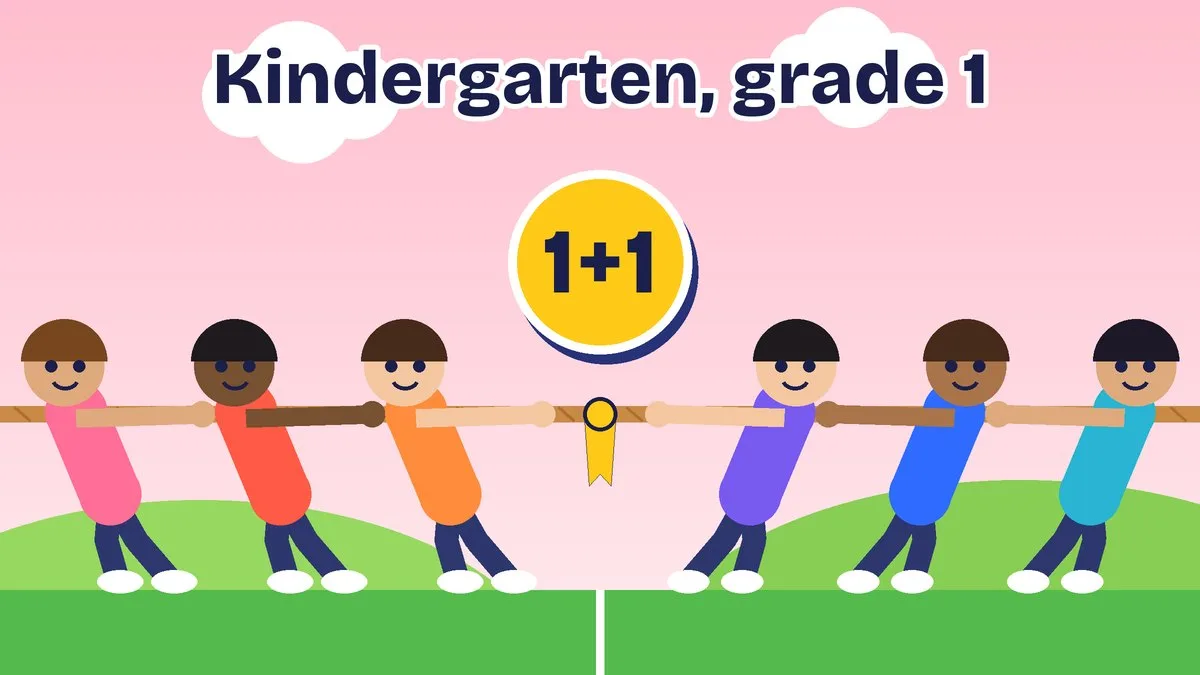
For math tug of war in kindergarten and grade 1, use the game at the top of this page on Starter, with an adult reading the questions, and treat it as a shared activity rather than a race. Only use facts the child can already work out, such as sums within 5.
Age group | Level | Match length | Opponent |
|---|---|---|---|
Kindergarten | Starter (up to 5) | 3 minutes | Adult playing slowly, or Gentle robot |
Grade 1 | Starter, then Easy (up to 10) | 2 or 3 minutes | Partner on the same level, or Gentle robot |
This page's mix asks small additions, subtractions and number bonds. It never goes above Easy, even if you choose a higher level.
Is it right for this age?
Common Core expects kindergarten children to fluently add and subtract within 5, and first graders within 10. Children are still learning what these operations mean, often by counting objects, and a race does not help with that stage. Wait until a child can answer a sum accurately, even slowly, before introducing the game. If the child is guessing, go back to counting objects.
How to run a first session
Start away from the screen. Move a counter along a paper strip for each right answer, so the child sees what the rope means.
Sit together and read each question aloud.
Let the child show you the answer on fingers before tapping.
Play one match, or stop halfway if attention fades.
Praise working something out, and point at one sum they got right.
Good no-screen options
The dice version works well here because children can count the dots, and one die is enough. A real rope with a ribbon also works, as long as children step it along rather than pulling. See the printable games for setup.
What not to do
Do not time children who are still counting, and do not compare children. Avoid big classes around one screen at this age, as most children will be waiting. Pairs with an adult work better. When children are ready for more, move to the grades 2 and 3 guide.
What questions will a child see?
| Level | Adding | Taking away | Number bonds |
|---|---|---|---|
| Starter | 2 + 3 | 7 − 3, with answers up to 5 | 2 + ? = 5 |
| Easy | 6 + 4 | 15 − 8, with answers up to 10 | 7 + ? = 10 |
The missing-number format, such as 2 + ? = 5, can be new for young children. Show it with objects first: put 2 counters out and ask how many more make 5.
A short first month
| Week | Activity |
|---|---|
| 1 | Count objects, and move a marker along a paper strip for each sum |
| 2 | Play the one-die game, counting on from the first number |
| 3 | Try one Starter match with an adult reading the questions |
| 4 | Play against the Gentle robot, with the adult helping |
How can you tell a child is ready?
A child is ready when they can work out a sum within 5 without help, understand that the rope moves when they get one right, and enjoy having a go. If they look at the rope and lose track of the question, or tap at random, go back to the objects. There is no rush.
Frequently asked questions
Which setting suits kindergarten and grade 1?
Use the Kindergarten and grade 1 topic with the Starter level, which uses small sums and number bonds.
Can young children play without reading?
An adult can read the questions aloud, or you can use the dice version so children count the dots.
How long should a session last?
One or two matches are enough at this age, and it is fine to stop part way through.